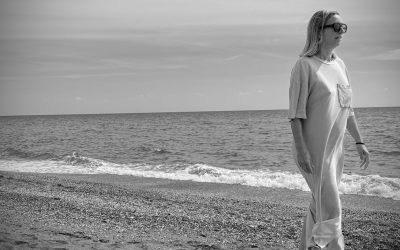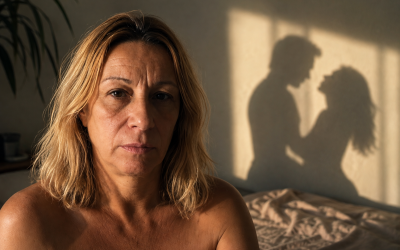
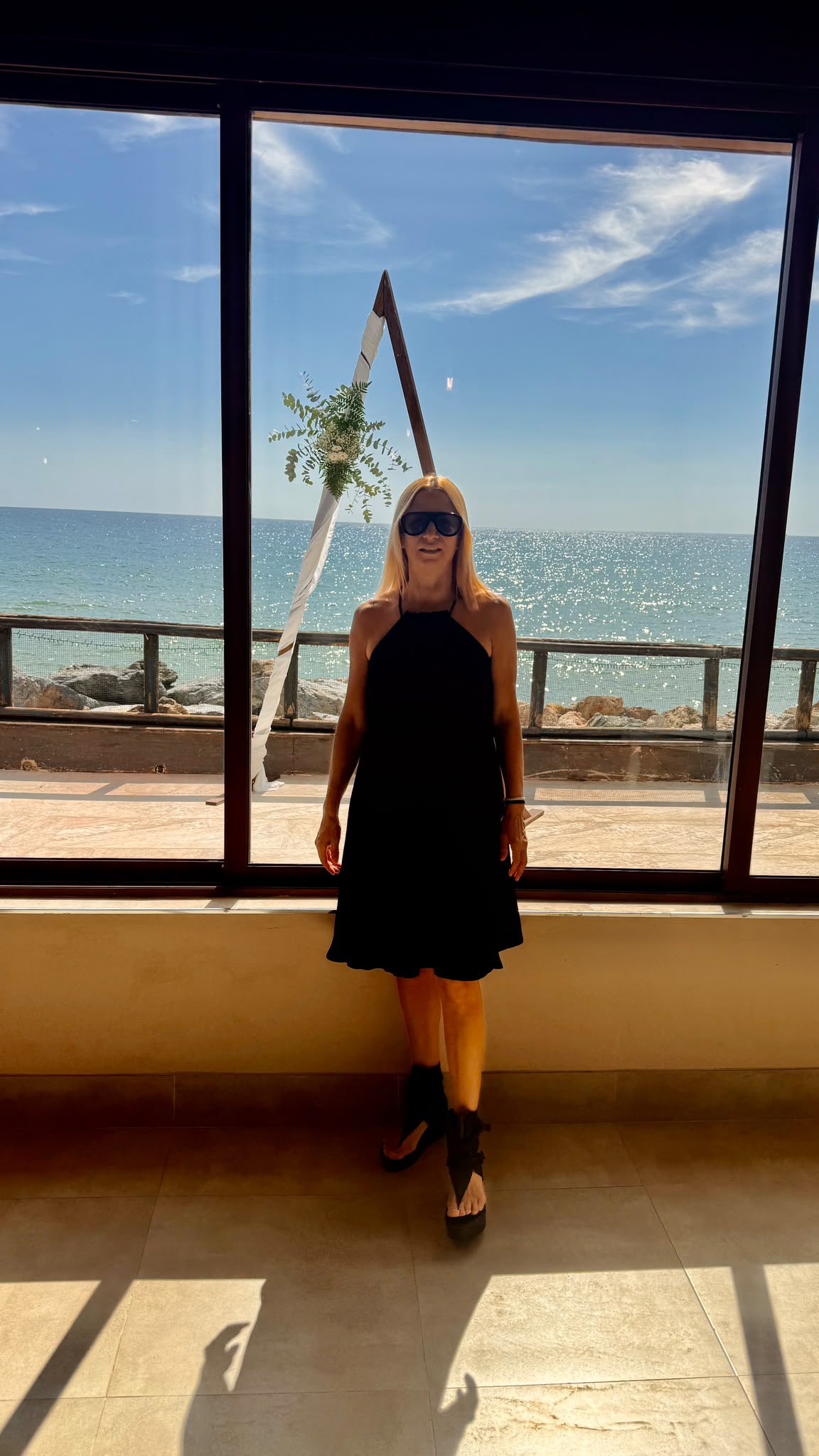
I’m 53, and there’s something I’ve become increasingly aware of lately: my body is changing. And I’m not just talking about wrinkles, grey hair, or the image I see in the mirror. I’m also talking about fatigue, energy levels, the desire to do things, the shape of my body, and the way it responds. My waist has changed, my back feels different, and my buttocks no longer have exactly the same shape they had a few years ago. So what? I’m getting older. It’s part of life, and I accept it. What I find difficult to understand is that some people still believe that, at 53, my body, my sexuality, or my professional experience should be worth less.
When did my body start changing?
I couldn’t say exactly when it began. These things don’t always happen overnight. One day, you look in the mirror and discover that the silhouette you have always known is changing. Your waist, your back, your hips, your buttocks… Sometimes I feel like wearing certain clothes, while at other times I prefer something different. There are also parts of my body that I used to show more often and that I choose to show less today.
But I don’t see these changes as a tragedy. I’ve spent many years living naturally in my body, working with it, enjoying it, and showing it. I don’t expect to have the same body at 53 that I had at 30. And I don’t necessarily want that, either. What matters to me is continuing to get to know my body, because some things change while others reveal themselves through experience. Accepting ageing doesn’t mean stopping paying attention to what is happening in our bodies or giving up taking care of them.
What I’ve noticed most isn’t the mirror: it’s the fatigue
There is one change that has been even more significant to me than the physical changes. For a while, I started experiencing a kind of tiredness, lethargy, and lack of energy. And that really caught my attention because I’m an active person. I enjoy exercising, travelling, staying on the move, working, starting projects, studying, and making the most of my days.
Of course, I also have moments when I don’t feel like doing anything at all. But this feeling seemed different. It was as though my body couldn’t always keep up with my desire to do things. When I discussed it with my doctor, she didn’t necessarily consider that this condition was related to menopause. And I can’t claim that everything was caused by it, either. Fatigue can have many causes. But I know how I felt, and I also know what I’ve noticed since then.
Hormone patches and the change I’ve noticed
Recently, I started using oestrogen patches as part of a medical treatment. Since then, I’ve noticed something that surprised me: that feeling of lethargy and fatigue seems to have decreased considerably. I feel much more motivated to do things. To move, exercise, write, work, study, and throw myself into one project after another.
I’m not saying that the patches are miraculous or that every woman will have the same experience. Nor can I prove that they are the only reason for what I’m feeling. But I’ve noticed a difference, and I don’t want to ignore it.
Sometimes I wonder why we talk about menopause as though every woman has to experience it in the same way. Some women have hot flushes; others experience sleep problems, physical changes, or emotional changes, while some have very few symptoms. Every body experiences this stage differently.
Medical information also recognises that the menopausal transition can cause sleep difficulties, mood changes, and other symptoms that affect wellbeing and energy levels. For anyone who wants to explore the subject further, I recommend reading the UK National Health Service information on the symptoms of menopause and perimenopause.
And that brings me to a reflection. Listening to healthcare professionals is important. But learning to listen to our bodies and explain what we feel is equally important. One should not exclude the other.
My body doesn’t need to look like it did when I was 30
Sometimes I think about all the energy we spend trying to preserve an earlier version of ourselves. The body we had in our twenties. The buttocks we had in our thirties. The waist we had in our forties. And what for?
I exercise, and I like taking care of myself. I don’t go to the gym solely for aesthetic reasons. I go because I enjoy moving, because it makes me feel strong, and because I love everything my body is still capable of doing. And, of course, appearance matters to me, too. But I don’t need to have the body I had twenty years ago to enjoy the body I have today.
Change is part of life. What interests me is how we experience it and how much influence we allow other people’s opinions to have on our relationship with our bodies. Because sometimes, the real problem doesn’t seem to be ageing itself. The problem is that some people cannot accept that we can continue to be sexual, desirable, and professional as we grow older.
What about sexuality after 50?
This is where my professional experience leads me to see things from a different perspective. I’ve been working in the field of sexuality for more than fifteen years, and I’m convinced that the appearance of a body does not determine all the pleasure it can experience or give.
A wider waist doesn’t eliminate sensitivity. Different-looking buttocks don’t mean we stop enjoying ourselves. Wrinkles don’t prevent someone from knowing how to touch, feel, or communicate. And being 53 doesn’t mean my sexuality is over.
My body today isn’t exactly the same as it was fifteen years ago. And neither am I. I’ve learned an enormous amount over the years: about my own body, other people’s bodies, pleasure, and things I once thought I already knew how to do.
In my article “You Can Have 30 Years of Sexual Experience and Still Not Know What You’re Doing”, I discussed an idea I continue to stand by: accumulating years of sexual experience doesn’t necessarily mean learning to understand bodies. The opposite is also true: as we grow older, we can continue learning, discovering new sensations, and improving the way we experience pleasure.
We cannot assume that what worked ten years ago will work in exactly the same way today. This applies at every age.
What if we blindfolded ourselves to enjoy sex?
I’ve been thinking for a while about an idea I’d like to try one day: experiencing sexuality while blindfolded. Why? Because I believe our eyesight often influences what we feel too much.
We see a wrinkle, a belly, buttocks that no longer look the way they used to, or someone we consider too old… and we start judging before we have even experienced anything. But what would happen if we couldn’t see the age or physical appearance of the person in front of us? What if we focused on their hands, their skin, their sensitivity, the way they touch, the rhythm, and the sensations? Would we still have the same prejudices?
I’m not saying physical attraction doesn’t matter. Of course it does. But I wonder how much pleasure we miss out on discovering because our minds decide in advance which bodies are desirable and which are not.
I’ve worked with many different bodies over the years, and I’m increasingly convinced that age and appearance alone do not determine our ability to experience or give pleasure. It’s not about age; it’s about attitude.
And perhaps blindfolding ourselves, always voluntarily and in an atmosphere of trust, would be an interesting way to discover just how much more we look than we feel. Because there is a difference between what we enjoy seeing and what our bodies are capable of feeling.
I accept my age. Why is that so difficult for other people?
This is one of the contradictions I encounter in my profession. When I work in different cities, some people know my age, see my photographs, and are interested in my services. But when they discover my rates, certain reactions still surprise me.
Some men, particularly younger ones, seem to think that because they are younger than me, they should pay less or even that they are doing me a favour by showing an interest in me. Since when has a client’s age determined the value of my work?
I’m not offering to be twenty years old. I’m offering knowledge, experience, and a way of working that I’ve developed over more than fifteen years. My body has changed, yes. But while my body was changing, I was still learning. And that has value, too.
Why do we accept that experience increases the value of so many professionals, yet continue to believe that a woman working in the field of sexuality should be worth less as she gets older?
I have no problem with someone choosing not to work with me or finding that my rates exceed their budget. What I question is the use of my age to devalue my work.
I’ve already reflected on experience and professional value in my article “I’m Still the Same Woman, but Now My Time Is Worth More”. And the more I travel, the more convinced I become that there is a difference between what someone can afford to pay and the value they recognise in another person’s work.
Experience is also built over the years. That doesn’t mean everyone learns simply by getting older. But I know what I’ve learned throughout my own life. And I have no intention of diminishing its value.
Menopause is teaching me things, too
There has been a great deal of discussion about menopause lately. And I think that’s positive: we need to talk about it, have access to information, be able to ask questions, and stop treating this stage of life as something that should be hidden.
But it also makes me think about the difference between studying an experience and living through it. I’ve spent years studying sexuality and working in this field. Yet there are certain things about my own body that I haven’t understood in the same way until I experienced them myself.
Of course, a healthcare professional can have extensive knowledge of menopause without having experienced it personally. I’m not questioning that. I simply believe that lived experience offers a different perspective.
Knowing that a woman may feel tired is one thing. Experiencing that fatigue, looking for explanations, trying a treatment under medical supervision, and observing changes in your own body is another.
Theory teaches us many things. Experience teaches us others. And what particularly interests me is what happens when we are able to listen to both.
What will I think when I’m 73?
There is something that makes me smile when I think about all this. I imagine myself twenty years from now, at 73, looking at photographs of the woman I am today. And I’m almost certain I’ll say to myself: “Cris, why were you trying to justify yourself at 53? You were so young!”
Because at 73, I’ll probably have a different body, different experiences, and a different way of looking at life. And perhaps many of the things that worry us today will seem absurd to me then.
At 30, we look back at our twenties. At 50, we remember our thirties. And probably, at 70, we’ll look back at our fifties and think about how young we were. Are we going to spend our entire lives looking backwards?
I’d rather keep moving forward. Keep taking care of myself. Keep exercising. Keep enjoying sexuality. Keep learning and discovering how my body changes. Above all, I don’t want to spend my life justifying every age I go through.
I’m 53. I don’t need to be 30 or wait until I’m 73 to understand my worth. My body is changing. So am I. And as long as I’m alive, I hope we’ll both continue to change.
I don’t want to compete with a woman in her twenties or thirties, either. What would be the point? I’ve already been those ages, and I’m now living through a different stage of life. I don’t want to look younger or prove that I can still do exactly the same things I did back then. I want to enjoy the body I have now and everything I’ve learned through it.
And there is something I still don’t understand: why do some people automatically associate youth with better sexuality? Since when have a belly, wrinkles, or grey hair determined someone’s ability to give pleasure?
In another article, “I’m Not a Fantasy, and I Don’t Fulfil Fantasies. I’m a Real Experience”, I was already reflecting on this obsession with youth and physical appearance.
Today, as I observe the changes in my body at 53, I still believe the same thing. I don’t need to compete with youth. My experience isn’t twenty years old: it has an entire lifetime behind it.
— Cris Blas Sex Coach · Organic Sex Coach · Practical Sex Coach