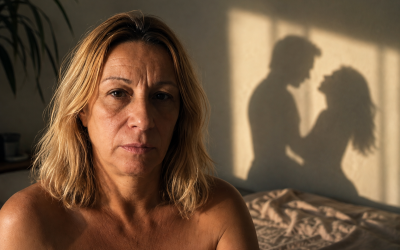
My experience as an escort and sex worker after the Swimsuit-Free Day in Madrid: a nudist reflection on freedom, the body, and double standards.
The “Swimsuit-Free Day” in Madrid’s swimming pools is, every year, the same reminder that this society still has a serious problem with skin. I hear the same old comments, especially the typical: “It’s fine, but there shouldn’t be any children.”
Seriously? As a sex worker who lives with nudity on a daily basis, I can assure you one thing: children are not born with prejudices. No one is born looking at a body and thinking of “sin.” That is garbage that adults put into their heads. The problem is not the children; the problem is the fear and double standards of the parents.
As an escort, I know perfectly well when nudity is a tool for seduction and when it is simply nature. That is why I understand naturism from a very clear perspective. The goal is not for everyone to go naked; the goal is for everyone to choose. That you can wear clothes if you feel like it or be a nudist if you want to, without either option causing a scandal.
It amuses me to see people who play at being a nudist one Sunday a year on an isolated beach, hidden from the world, but then hide that part of themselves. I don’t criticize anyone’s process, but let’s be honest: if your freedom only exists in a closed venue for a few hours, you are not free; you are a weekend prisoner.
I live that contradiction myself. I have a father who still judges my decisions and my way of life, considering it incorrect. And even though I am an adult, independent woman, I keep running into the limits and judgment of a culture that is unable to understand that the real barrier is not nudity, but prejudice.
Furthermore, if so many consider themselves environmentalists, it is about time to reflect on the relationship between clothing and the environment. The textile industry is one of the most polluting on the planet. I am not saying we should stop wearing clothes, but we should question how much we buy out of pure habit or fear of what people will say. Sometimes, committing to a nudist philosophy is the most sustainable act of responsible consumption there is.
The great hypocrisy belongs to those who define themselves as naturists but then, in their private lives, do not dare to live as such. It is one thing to take your clothes off on a beach where everyone is doing the same, and quite another to claim your body in your own home, in front of your partner, your family, or your roommates. That is where the real struggle begins.
My profession as an escort and sex worker has taught me not to ask for permission to exist or to manage my own body. Naturism, if you truly feel it, is in you one hundred percent, 365 days a year. And that implies having uncomfortable conversations, setting boundaries, and claiming the right to live naturally in your own space.
This is a personal reflection by Blassia on naturism, bodily freedom, and empowerment. Beyond nudity, true change comes from questioning prejudices and defending the right of every person to decide how they want to live.
If you are interested in these types of reflections on naturism, conscious sexuality, well-being, and personal freedom, you can discover more articles on Blassia’s blog